Representative 79.5% APR. LoanTube is a credit broker not a lender. Credit subject to status & affordability assessment by Lenders.
Representative 79.5% APR.

Secured Business Loan

Leverage valuable assets as security for your business loan.

4.7

Customer Reviews

Get started today

Loan Amount Icon
Loan Term Icon

Warning: Late repayment can cause you serious money problems. For more information, go to moneyhelper.org.uk

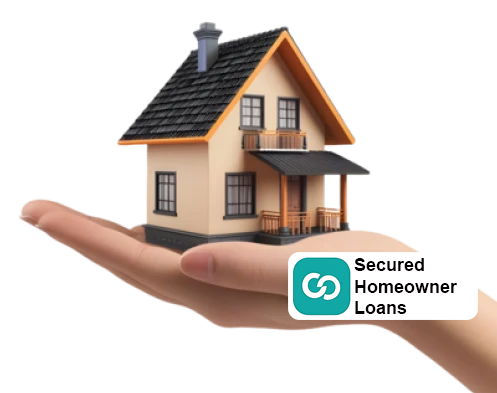
What is a Secured Homeowner Loan?

A Secured Homeowner Loan, also known as a second charge mortgage, is a type of loan that is secured against the equity in your residential property. Equity is the portion of your property that you own outright the difference between its current market value and the outstanding balance of your existing mortgage and any other debts secured against it. By using this equity as security, lenders are often able to offer larger loan amounts and more flexible repayment terms compared to unsecured personal loans. These loans are designed for homeowners who wish to borrow a significant sum of money for a variety of purposes, such as home improvements, debt consolidation, or other major life expenses. Because the loan is secured against your home, it represents a significant financial commitment and carries the risk of repossession if you fail to keep up with repayments. Therefore, it is a decision that should be approached with careful consideration and, where appropriate, professional financial advice.

The primary characteristic of a secured homeowner loan is the ‘charge’ that is registered against your property at HM Land Registry. Your main mortgage is the ‘first charge’, and the secured loan becomes the ‘second charge’. This means that in the unfortunate event of a default that leads to the sale of your property, the first charge mortgage lender would be repaid first from the proceeds, followed by the second charge lender. This hierarchical repayment structure is a key reason why the interest rates on second charge mortgages are often higher than those for first charge mortgages, as they represent a greater risk to the lender. However, they can be an attractive option for homeowners who may not be able to remortgage their existing property, perhaps due to being on a favourable fixed-rate deal that they do not wish to lose, or because their credit circumstances have changed since they took out their original mortgage. The application process for a secured loan is thorough, involving a detailed assessment of your income, expenditure, and credit history to ensure the loan is affordable and suitable for your circumstances, in line with the Financial Conduct Authority’s (FCA) responsible lending requirements .

Ready to get started?

Compare loans in 3 simple steps

1. Loan Details

Tell us how much you need, for how long and for what purpose.

2. See offers

We find you the loan offers you qualify for from multiples lenders.

3. Select

Select the loan that best matches your circumstances and Get Funded.

The LoanTube Pledge

Searching for a loan on LoanTube won’t impact your credit score. We do not sell your data to any third parties.

Educated guesses aren't good enough

You choose the terms, we do the math.

Check your affordability with our Business Loan calculator and make an informed financial decision.

Get started today

Loan Amount Icon
Loan Term Icon
Loan Purpose Icon

The rate you get will depend on your individual circumstances. Late repayment can cause you serious money problems. For more information, go to moneyhelper.org.uk

Get started today

£100,000

Loan Term

Total repayment

Monthly repayment

RAPR

Interest

Total cost of credit

18 Months

£111,785.00

£6,210.28

14.4%

14.4% p.a (Fixed)

£11,785.00

The rate you get will depend on your individual, financial circumstances. Late repayment can cause you serious money problems. For more information, Go to moneyhelper.org.uk

How Secured Business Loans Work

The process of obtaining a secured homeowner loan involves several key stages, from the initial enquiry to the release of funds. As a credit broker, LoanTube facilitates this process by connecting you with a panel of suitable lenders. The journey begins when you make an enquiry, providing initial details about your borrowing needs, your property, and your financial situation. We then use this information to conduct a soft credit search, which does not impact your credit score, to identify lenders on our panel whose criteria you are likely to meet. This allows us to provide you with a set of initial, no-obligation quotes, giving you a clear idea of the potential loan amounts, interest rates, and monthly repayments available to you. It is crucial at this stage to carefully review these options and consider which, if any, are suitable for your needs. Remember, this is an opportunity to compare different products and lenders without any commitment.
 
Once you have selected a preferred option, you will proceed to a full application. This requires more detailed information and supporting documentation, such as proof of income (payslips, bank statements, or tax returns for the self-employed), proof of identity, and details of your existing mortgage. The lender will then conduct a comprehensive affordability assessment, which is a regulatory requirement designed to ensure that you can comfortably afford the loan repayments alongside your existing financial commitments [2]. This involves a detailed analysis of your income and expenditure. The lender will also arrange for a valuation of your property to confirm its current market value and the amount of equity you hold. This can sometimes be done electronically, but in many cases, a physical inspection may be required. Throughout this process, it is vital to be transparent and provide accurate information, as any discrepancies can lead to delays or the rejection of your application. Upon successful completion of these checks and the lender’s final approval, you will receive a formal loan offer. After you have accepted the offer and completed the legal paperwork, the funds will be transferred to your bank account.
 
Working Example:
Let’s consider a homeowner named Alex, who owns a property valued at £350,000 with an outstanding mortgage of £150,000. Alex wants to borrow £40,000 for a major home extension project. Alex’s equity in the property is £200,000 (£350,000 – £150,000). Alex approaches LoanTube to explore secured loan options. After an initial assessment and a soft credit search, LoanTube presents Alex with a quote from a lender for a £40,000 loan over a 10-year term, with a fixed interest rate of 8% per annum, resulting in monthly repayments of approximately £485. Alex decides to proceed with this offer and submits a full application, providing the necessary documentation. The lender conducts its due diligence, including a full credit check and a property valuation, which confirms the property’s value. The lender’s affordability assessment confirms that Alex can comfortably afford the monthly repayments. The loan is approved, and after the legal process is complete, the £40,000 is transferred to Alex’s account. Alex’s total secured debt on the property is now £190,000 (£150,000 first charge mortgage + £40,000 second charge loan). Alex is now responsible for two separate monthly payments: one for the original mortgage and one for the new secured loan.
Advantages of Secured Homeowner Loans
Secured homeowner loans offer several compelling advantages for UK homeowners seeking to raise substantial capital, particularly when compared to other forms of credit. However, it is a regulatory requirement to acknowledge that each advantage carries an associated risk, and a balanced perspective is essential for a responsible borrowing decision.
 
1. Access to Larger Loan Amounts and Longer Terms: Secured loans allow you to borrow significantly more than an unsecured personal loan, often up to £500,000 or more, depending on your property equity and affordability. This is because the lender has the security of your home, which mitigates their risk. The repayment terms can also be extended, sometimes up to 25 years, which can make the monthly repayments more manageable. Risk Acknowledgment: While longer terms reduce monthly payments, they significantly increase the total amount of interest paid over the life of the loan. Furthermore, borrowing a large sum means a larger debt secured against your home, amplifying the risk of repossession if you default.
 
2. Potential for Lower Interest Rates (Compared to Unsecured Loans): Due to the security provided by your property, secured loans typically feature lower interest rates than unsecured personal loans, especially for larger sums or for applicants with a less-than-perfect credit history. This can translate into substantial savings on the cost of borrowing. Risk Acknowledgment: The interest rate on a secured loan is generally higher than that of a first charge mortgage. Moreover, the lower rate is contingent on the continued repayment of the loan; failure to pay could lead to the loss of your home, a consequence far more severe than defaulting on an unsecured loan.
 
3. Flexibility in Purpose and Use of Funds: The funds from a secured homeowner loan can be used for almost any legitimate purpose. Common uses include significant home improvements, funding a business venture, or consolidating existing high-interest debts. This flexibility makes it a versatile financial tool
 
4. Preserving Your Existing First Charge Mortgage: A secured loan allows you to raise capital without disturbing your existing first charge mortgage. This is particularly advantageous if you are currently on a highly competitive, fixed-rate deal with early repayment charges, or if your current mortgage terms are otherwise favourable. Remortgaging to release equity would mean losing these terms. Risk Acknowledgment: By taking out a second charge, you are managing two separate debt products, each with its own terms, conditions, and repayment schedule. This complexity increases the administrative burden and the potential for missing a payment on one of the two loans.
 
5. Viability for Applicants with Adverse Credit History: Lenders offering secured loans are often more willing to consider applicants who have experienced credit issues in the past, such as County Court Judgments (CCJs) or defaults. The security of the property provides a level of reassurance that allows them to take on a higher risk profile. 
 
6. Potential for Tax Efficiency (for Business Purposes): If the funds from the secured loan are used wholly and exclusively for business purposes, the interest payments may be tax-deductible. This can provide a significant financial benefit for self-employed individuals or business owners. Risk Acknowledgment: Tax laws are complex and subject to change. Any potential tax benefits should be confirmed with a qualified accountant or tax advisor before relying on them as a reason to take out the loan. Using a residential property to secure business debt carries the inherent risk that a business failure could lead to the loss of the family home.
 
The decision to proceed with a secured homeowner loan must be based on a thorough understanding of these advantages, weighed equally against the significant risks involved. Professional advice is strongly recommended to ensure the loan is appropriate for your long-term financial stability.

Disadvantages of Secured Homeowner Loans
The decision to take out a secured homeowner loan must be approached with a comprehensive understanding of the potential risks and drawbacks. In compliance with Financial Conduct Authority (FCA) regulations, the disadvantages must be given equal prominence and detail to the advantages, ensuring a clear, fair, and not misleading presentation of the product.
 
1. Risk of Property Repossession: The Ultimate Consequence
The most significant and critical disadvantage of a secured homeowner loan is the risk of losing your home. By securing the loan against your property, you grant the lender the legal right to seek repossession and force the sale of your home if you fail to keep up with the agreed repayments. This is not a theoretical risk; it is the fundamental mechanism that underpins the loan. While the first charge mortgage lender has the primary claim on the sale proceeds, the second charge lender also has a vested interest and can initiate repossession proceedings. The FCA mandates that lenders must treat customers fairly, particularly those in financial difficulty, but ultimately, the security provides the lender with a powerful recourse. Risk Mitigation: Before committing, you must rigorously assess your ability to meet the repayments under various scenarios, including a potential rise in interest rates or a change in your personal financial circumstances. Seeking independent debt advice from organisations like MoneyHelper.org.uk is strongly advised if you anticipate any difficulty.
 
2. Increased Total Cost of Borrowing:
While a secured loan may offer a lower Annual Percentage Rate (APR) than an unsecured loan, the total cost of borrowing can be substantially higher due to the extended repayment period. A loan repaid over 20 years will accrue significantly more interest than the same amount repaid over five years, even if the monthly payments are lower. This extended commitment means you are dedicating a portion of your future income to servicing this debt for a considerable duration. Furthermore, secured loans often come with various fees, such as arrangement fees, valuation fees, and legal fees, which can be added to the loan amount, compounding the interest charged. Professional Analysis: A comprehensive illustration of the total amount repayable, including all interest and fees, is mandatory before you sign any agreement. You should compare this total cost against all alternative borrowing options to ensure you are making an economically sound decision.
 
3. Impact on Future Borrowing and Credit Rating: Taking on a second charge mortgage can affect your ability to secure further credit or remortgage your property in the future. Lenders will view the total amount of debt secured against your home, which may limit your options when your first charge mortgage term ends. Furthermore, any missed or late payments on the secured loan will be recorded on your credit file, severely damaging your credit rating. A poor credit history can lead to higher interest rates on all future borrowing, including credit cards and car finance, and may even impact non-financial applications such as tenancy agreements or insurance premiums. Warning Signs: If you are already struggling with your current debt obligations, adding a secured loan will likely exacerbate the problem. The FCA’s Consumer Duty requires lenders to act in your best interest, but the ultimate responsibility for managing your credit profile rests with you.
 
4. Early Repayment Charges (ERCs) and Lack of Flexibility: Many secured loan products include Early Repayment Charges (ERCs), which are penalties applied if you repay the loan in full or make significant overpayments beyond a specified limit during the initial term (often the first few years). These charges can be substantial, effectively locking you into the loan for a set period and limiting your financial flexibility. While the option to repay early may seem attractive, the cost of doing so must be clearly understood from the outset. Contractual Review: You must scrutinise the loan agreement for all clauses relating to early repayment, overpayments, and exit fees. The terms of the loan are legally binding, and the ERCs are designed to compensate the lender for the loss of future interest payments.
 
5. Fees and Charges Compounding the Debt:
Secured loans typically involve a range of fees that are often higher than those associated with unsecured loans. These can include broker fees, lender arrangement fees, valuation fees, and legal costs. Crucially, many borrowers choose to ‘add’ these fees to the loan amount, meaning they are borrowing the money to pay the fees themselves. This practice, known as ‘capitalisation of fees’, means you pay interest on the fees for the entire term of the loan, significantly increasing the overall cost. Transparency Requirement: You must demand a clear breakdown of all fees and understand the total impact of capitalising them. For example, a £1,000 fee added to a £50,000 loan over 20 years at 8% interest could result in hundreds or even thousands of pounds of extra interest paid on that fee alone.
 
6. Complexity and the Need for Professional Intermediation:
The secured loan market is complex, involving specialist lenders and often requiring the use of a regulated credit broker. While LoanTube provides a valuable service in matching you with suitable lenders, the complexity of the products, the legal implications of a second charge, and the need for a property valuation mean the process is far from ‘simple’ or ‘easy’. The reliance on a broker, while beneficial, means an additional layer of fees and communication. Regulatory Context: The FCA’s regulation of the second charge market aims to protect consumers, but the onus remains on the borrower to fully comprehend the intricate details of the loan, the legal charge on their property, and the potential consequences of non-compliance. The inherent complexity necessitates professional advice to navigate safely.

We've partnered with the best in the business

Offers from highly reputable lenders to help with your financial needs.

What are the different types of loans?

What customers say about us*

We do our best to provide you the best experience ever

* showing our selected 4 & 5 star reviews

Need some extra help?

Frequently Asked Questions About Secured Business Loans

What is the difference between a Secured Loan and an Unsecured Personal Loan?
The fundamental difference between a secured loan and an unsecured personal loan lies in the requirement for collateral. A secured loan, such as a Secured Homeowner Loan, requires the borrower to pledge an asset, typically their home equity, as security for the debt. This collateral provides the lender with a legal claim over the asset, meaning they can force its sale to recover their funds if the borrower defaults on the repayments. Because of this reduced risk, secured loans generally allow for much larger borrowing amounts, often up to hundreds of thousands of pounds, and can be repaid over longer terms, sometimes up to 25 years. This structure makes them suitable for major financial undertakings like large-scale home renovations or significant debt consolidation.
 
Conversely, an unsecured personal loan does not require any collateral. The lending decision is based solely on the borrower’s creditworthiness, income, and financial history. Consequently, unsecured loans are typically limited to smaller amounts, usually up to £25,000 or £50,000, and have shorter repayment periods, often up to seven years. While an unsecured loan carries no risk of property repossession, the interest rates are generally higher to compensate the lender for the increased risk they are taking. Furthermore, eligibility for the most competitive unsecured rates is usually restricted to those with excellent credit scores. The choice between the two must be carefully considered, weighing the lower risk of an unsecured loan against the potential for higher borrowing limits and longer terms offered by a secured loan.
What is a Second Charge?
A second charge is a legal term referring to a mortgage or loan that is registered against a property after the primary, or first, mortgage. When a property is used as security for a loan, a legal charge is registered with HM Land Registry, establishing the lender’s interest in the property. The first charge is the primary mortgage used to purchase the home, and it holds the senior position in the hierarchy of repayment. A second charge, therefore, is a subsequent claim on the property’s equity. This means that in the event of the property being sold, whether voluntarily or through repossession, the proceeds of the sale are used to fully satisfy the first charge lender’s debt before any funds are allocated to the second charge lender.
 
The subordinate position of the second charge is why it is often referred to as a Second Charge Mortgage, and it is a key factor in the lending decision. Because the second charge lender is at a higher risk of not recovering their full debt if the property value falls significantly, the interest rates on second charge mortgages are typically higher than those on first charge mortgages. The existence of a second charge does not affect the terms of the first charge mortgage, but it does mean the homeowner has two separate, secured debts to manage. It is essential to understand the legal implications of a second charge, as it directly links your home to the repayment of the loan, making the risk of repossession a very real consequence of default.

The revenue based business finance repayment mechanism usually involves integration with your payment processing systems or bank account monitoring, allowing automatic collection based on actual sales rather than fixed monthly obligations like traditional business loans.

What is Home Equity and Loan-to-Value (LTV)?
Home equity represents the portion of your property that you truly own, calculated as the difference between the current market value of your home and the total outstanding debt secured against it, such as your first charge mortgage and any existing secured loans. For example, if your home is valued at £300,000 and your outstanding mortgage is £100,000, your equity is £200,000. This equity is the asset that a secured homeowner loan uses as collateral. Lenders will only allow you to borrow a percentage of this equity, ensuring a buffer remains to protect their investment, especially if property values decline.
 
Loan-to-Value (LTV) is a critical metric used by lenders to assess risk and determine eligibility. It is expressed as a percentage and calculated by dividing the total amount of debt secured against the property by the property’s current market value. For a secured homeowner loan, the lender calculates the combined LTV, which includes the first charge mortgage and the proposed second charge loan. If the property is valued at £300,000 and the total secured debt will be £150,000, the LTV is 50% (£150,000 / £300,000). Lenders typically impose maximum LTV limits, often around 80% to 85%, and the most competitive interest rates are usually reserved for applicants with lower combined LTVs, as this indicates a lower risk profile for the lender.
 
The subordinate position of the second charge is why it is often referred to as a Second Charge Mortgage, and it is a key factor in the lending decision. Because the second charge lender is at a higher risk of not recovering their full debt if the property value falls significantly, the interest rates on second charge mortgages are typically higher than those on first charge mortgages. The existence of a second charge does not affect the terms of the first charge mortgage, but it does mean the homeowner has two separate, secured debts to manage. It is essential to understand the legal implications of a second charge, as it directly links your home to the repayment of the loan, making the risk of repossession a very real consequence of default.

The revenue based business finance repayment mechanism usually involves integration with your payment processing systems or bank account monitoring, allowing automatic collection based on actual sales rather than fixed monthly obligations like traditional business loans.

Am I eligible for a Secured Homeowner Loan?
Eligibility for a Secured Homeowner Loan is determined by a combination of factors, primarily focusing on your status as a homeowner, the equity available in your property, and your ability to afford the repayments. Firstly, you must be a homeowner with an existing mortgage or own your property outright, as the loan must be secured against the property. Lenders will assess the amount of equity you have available, typically requiring a minimum level of equity to be retained after the loan is granted, often resulting in a maximum combined Loan-to-Value (LTV) of around 85%. Secondly, and most importantly under FCA regulations, you must pass a rigorous affordability assessment.
 
The affordability assessment involves a detailed review of your income and expenditure to ensure that you can comfortably meet the monthly repayments of the new secured loan alongside all your existing financial commitments. Lenders will scrutinise your Debt-to-Income (DTI) and Loan-to-Income (LTI) ratios. Other factors considered include your credit history, employment status (with specific requirements for self-employed applicants), and age. While some lenders specialise in offering loans to applicants with adverse credit, the rates offered will be significantly higher. It is essential to understand that meeting the minimum criteria does not guarantee approval; the final decision is always subject to the lender’s full underwriting process and their assessment of your overall financial stability.

 
Loan-to-Value (LTV) is a critical metric used by lenders to assess risk and determine eligibility. It is expressed as a percentage and calculated by dividing the total amount of debt secured against the property by the property’s current market value. For a secured homeowner loan, the lender calculates the combined LTV, which includes the first charge mortgage and the proposed second charge loan. If the property is valued at £300,000 and the total secured debt will be £150,000, the LTV is 50% (£150,000 / £300,000). Lenders typically impose maximum LTV limits, often around 80% to 85%, and the most competitive interest rates are usually reserved for applicants with lower combined LTVs, as this indicates a lower risk profile for the lender.

 
The subordinate position of the second charge is why it is often referred to as a Second Charge Mortgage, and it is a key factor in the lending decision. Because the second charge lender is at a higher risk of not recovering their full debt if the property value falls significantly, the interest rates on second charge mortgages are typically higher than those on first charge mortgages. The existence of a second charge does not affect the terms of the first charge mortgage, but it does mean the homeowner has two separate, secured debts to manage. It is essential to understand the legal implications of a second charge, as it directly links your home to the repayment of the loan, making the risk of repossession a very real consequence of default.

The revenue based business finance repayment mechanism usually involves integration with your payment processing systems or bank account monitoring, allowing automatic collection based on actual sales rather than fixed monthly obligations like traditional business loans.

Can I get a Secured Homeowner Loan with Bad Credit?
Yes, it is possible to obtain a Secured Homeowner Loan even if you have a history of adverse credit, such as judgements, defaults, or missed payments. The secured loan market includes specialist lenders who cater specifically to borrowers with less-than-perfect credit profiles. The key reason this is possible is the security provided by your home equity. The collateral significantly reduces the lender’s risk, making them more willing to consider applicants who might be automatically rejected by mainstream unsecured lenders. However, this increased accessibility comes with a crucial trade-off that must be fully understood before proceeding.

 
Lenders who accept applicants with adverse credit will mitigate their increased risk by charging significantly higher interest rates. The interest rate offered will be directly proportional to the severity and recency of your credit issues. For example, a recent CCJ will result in a much higher rate than a minor default from several years ago. Furthermore, the affordability assessment remains a mandatory and rigorous requirement under FCA rules, ensuring that the loan is sustainable despite your credit history. It is vital to compare the total cost of borrowing from specialist lenders and to seek independent financial advice. Securing a high-interest loan against your home, especially with a history of financial difficulty, dramatically increases the risk of repossession, which is the most severe consequence of default.
Will applying for a Homeowner Loan affect my credit score?
The initial stages of applying for a Secured Homeowner Loan should not negatively affect your credit score, provided the broker or lender uses a ‘soft search’ or ‘quotation search’ for the initial eligibility check. A soft search allows a lender to view a snapshot of your credit file to determine your likely eligibility without leaving a visible mark on your file that other lenders can see. This is the standard practice for initial enquiries and is designed to allow you to compare options without commitment. It is important to confirm with the broker or lender that they will only perform a soft search at the initial stage.
 
However, once you decide to proceed with a full application, the chosen lender will conduct a ‘hard search’ or ‘credit application search’ on your credit file. This hard search is visible to all other lenders and will remain on your credit file for up to 12 months. A single hard search is unlikely to cause significant damage to your credit score. The potential issue arises if you make multiple full applications in a short period, as numerous hard searches can signal to other lenders that you are desperate for credit, which can negatively impact your score. Therefore, it is highly recommended to use a broker to narrow down the most suitable lender before committing to a full application and the associated hard credit check.
How long does the Secured Loan application process take?
The duration of the Secured Homeowner Loan application process can vary significantly, typically ranging from three to eight weeks, depending on the complexity of your case and the efficiency of the lender and solicitor. Unlike an unsecured personal loan, which can sometimes be approved and funded within days, a secured loan involves several mandatory steps that require time to complete. These steps include the full affordability assessment, the formal valuation of your property, and the necessary legal work to register the second charge with HM Land Registry. The legal process, in particular, often accounts for the longest part of the timeline.
The speed of the process is also heavily influenced by the borrower’s preparedness and responsiveness. Delays frequently occur when applicants fail to provide the required documentation promptly or accurately. Documents such as proof of income, bank statements, and proof of identity must be readily available and valid. Furthermore, if the property valuation requires a physical inspection, scheduling this can add to the timeline. While some specialist lenders may offer a faster turnaround for straightforward cases, it is prudent to anticipate a minimum of three to four weeks. You should never rely on an “instant” or “fast” process, and any claims suggesting such speed should be treated with caution, as they may overlook the mandatory regulatory and legal requirements.
 
However, once you decide to proceed with a full application, the chosen lender will conduct a ‘hard search’ or ‘credit application search’ on your credit file. This hard search is visible to all other lenders and will remain on your credit file for up to 12 months. A single hard search is unlikely to cause significant damage to your credit score. The potential issue arises if you make multiple full applications in a short period, as numerous hard searches can signal to other lenders that you are desperate for credit, which can negatively impact your score. Therefore, it is highly recommended to use a broker to narrow down the most suitable lender before committing to a full application and the associated hard credit check.
What can I use a Secured Homeowner Loan for?

A Secured Homeowner Loan offers significant flexibility, as the funds can be used for almost any legitimate purpose, unlike some other forms of borrowing that are restricted to a specific use. The most common and financially prudent uses include substantial home improvements, such as extensions, loft conversions, or major renovations, which can potentially increase the value of your property. Another frequent use is debt consolidation, where multiple high-interest debts, such as credit cards or unsecured loans, are combined into a single, lower-interest, secured loan. This can simplify monthly payments and potentially reduce the overall interest rate.

Beyond these common uses, the funds can also be used for major life events, such as funding a child’s university education, paying for a wedding, or covering significant medical expenses. Some individuals also use secured loans to raise capital for a business venture or to pay a tax bill. However, it is essential to remember that while the purpose is flexible, the security is not. Using your home as collateral for a discretionary expense, such as a luxury holiday, means you are putting your property at risk for a non-essential item. Therefore, the decision to use a secured loan should always be justified by a clear, long-term financial benefit that outweighs the inherent risk of repossession.

Can I use a Secured Loan to consolidate existing debts?
Yes, debt consolidation is one of the most common and compelling reasons for taking out a Secured Homeowner Loan. The primary benefit is the potential to reduce your overall monthly outgoings by combining multiple high-interest, unsecured debts, such as credit cards, store cards, and personal loans, into a single, lower-interest, secured payment. Because secured loans typically offer lower interest rates and longer repayment terms than unsecured credit, the monthly repayment can be significantly reduced, providing immediate relief to your cash flow. This simplification of debt management can also make it easier to budget and track your financial progress.
 
However, consolidating unsecured debt into a secured loan carries a profound risk that must be fully understood. By transferring an unsecured liability where the worst-case scenario is damage to your credit score onto a secured liability, you are now putting your home at risk of repossession. If you fail to keep up with the consolidated loan repayments, the lender can seek to sell your property to recover the debt. Furthermore, while the monthly payment may be lower due to the longer term, the total amount of interest paid over the life of the loan will be significantly higher. Therefore, debt consolidation via a secured loan should only be considered if you have a robust plan to manage the new debt and if you seek independent advice from a debt charity like MoneyHelper.org.uk.
 

Beyond these common uses, the funds can also be used for major life events, such as funding a child’s university education, paying for a wedding, or covering significant medical expenses. Some individuals also use secured loans to raise capital for a business venture or to pay a tax bill. However, it is essential to remember that while the purpose is flexible, the security is not. Using your home as collateral for a discretionary expense, such as a luxury holiday, means you are putting your property at risk for a non-essential item. Therefore, the decision to use a secured loan should always be justified by a clear, long-term financial benefit that outweighs the inherent risk of repossession.

How much can I borrow with a Homeowner Loan?
The amount you can borrow with a Secured Homeowner Loan is primarily determined by two key factors: the amount of equity you have in your property and your proven ability to afford the repayments. Lenders typically allow you to borrow up to a maximum combined Loan-to-Value (LTV) ratio, which is the total secured debt (first charge mortgage plus the new secured loan) as a percentage of your property’s value. This maximum LTV is often capped at around 80% to 85%, meaning the maximum loan amount is constrained by the remaining equity buffer. For example, if your home is worth £400,000 and your LTV limit is 80%, the total secured debt cannot exceed £320,000.
 
In addition to the equity limit, the FCA-mandated affordability assessment is a critical constraint. Lenders must ensure that the new monthly repayment is sustainable for you, taking into account your income, expenditure, and other financial commitments. They will use metrics like Debt-to-Income (DTI) and Loan-to-Income (LTI) ratios to determine the maximum affordable monthly payment, which in turn dictates the maximum loan size and term. While some specialist lenders may offer loans up to £500,000 or even more for high-value properties, the final amount is always the lower of the equity limit and the affordability limit. You should only borrow what you genuinely need and can comfortably afford to repay.

Can I repay my Secured Loan early and are there charges?

Yes, under the terms of the Consumer Credit Act and the regulation of the Financial Conduct Authority (FCA), you have the right to repay your Secured Homeowner Loan early, either in full or in part. However, whether you incur a charge for doing so depends entirely on the specific terms and conditions of your loan agreement. Many secured loan products include an Early Repayment Charge (ERC), which is a penalty fee levied by the lender to compensate them for the loss of future interest payments they would have received.
These ERCs are typically applied if you repay the loan within a defined initial period, often the first two to five years of the term. The charge is usually calculated as a percentage of the outstanding balance or a fixed number of months’ interest. It is absolutely critical that you scrutinise the loan offer document for the exact details of any ERCs before signing the agreement. Some lenders offer products without ERCs, which provide greater flexibility but may come with a slightly higher interest rate. If you anticipate making significant overpayments or repaying the loan early, choosing a product with no or low ERCs could save you a substantial amount of money, and independent advice should be sought to weigh this trade-off.

What are the Pros and Cons of a Secured Homeowner Loan?

The primary advantage of a Secured Homeowner Loan is the ability to access a large sum of capital, often significantly more than an unsecured loan, by leveraging the equity in your property. This is coupled with the potential for lower interest rates compared to unsecured borrowing, especially for those with a less-than-perfect credit history [5], and the flexibility of long repayment terms that make monthly payments more manageable. Furthermore, it allows you to raise capital without disturbing a favourable first charge mortgage deal, avoiding potential early repayment charges on that primary debt.

The most significant and overriding disadvantage is the inherent risk of repossession. Your property may be repossessed if you do not keep up repayments on the loan. This is a risk that must be given paramount consideration. Other drawbacks include the increased total cost of borrowing due to the extended repayment terms, the potential for Early Repayment Charges (ERCs) that restrict financial flexibility, and the various fees and charges associated with the application, which can be capitalised into the loan, increasing the total debt. The complexity of the product also necessitates careful consideration and often requires professional financial advice to ensure suitabilit.

Is my home at risk if I can't keep up with the loan repayments?

Yes, unequivocally, your home is at significant risk if you fail to keep up with the repayments on a Secured Homeowner Loan. This is the most critical fact you must understand before entering into the agreement. By securing the loan against your property, you grant the lender a legal right, or a ‘charge’, over your home. If you default on the loan, the lender has the legal authority to begin repossession proceedings to force the sale of your property. The proceeds from the sale are then used to repay the outstanding debt.

While the Financial Conduct Authority (FCA) requires lenders to treat customers fairly and explore all reasonable forbearance options before resorting to repossession, the ultimate security for the loan is your home. Missing payments will not only lead to repossession risk but will also incur additional charges and severely damage your credit rating, making future borrowing extremely difficult. If you anticipate or begin to struggle with repayments, you must immediately contact your lender and seek free, independent debt advice. Proactive engagement is essential, but it does not negate the fundamental risk that your home is the collateral for the debt.

What are the alternatives to a Secured Homeowner Loan?

There are several alternatives to a Secured Homeowner Loan, and the most suitable option depends on the amount you need to borrow, your credit profile, and your willingness to put your home at risk. The primary alternative is a further advance from your existing first charge mortgage lender, which is essentially a second loan from the same provider, often at a competitive rate. Another option is a remortgage, where you switch your entire mortgage to a new lender and borrow a larger amount, releasing the required equity. This can be cost-effective but may involve early repayment charges on your existing mortgage.

For smaller borrowing needs, an unsecured personal loan is a viable alternative. While the interest rate may be higher and the term shorter, your home is not used as collateral, eliminating the risk of repossession. Finally, for those with significant equity and a need for flexible, ongoing access to funds, a Home Equity Line of Credit (HELOC), though less common in the UK than in the US, functions similarly to a flexible secured loan or a large overdraft. Before making a decision, you must compare the total cost, the repayment terms, and the level of risk associated with each alternative, and professional financial advice is highly recommended.

What should I consider before applying for a Secured Loan?

Before applying for a Secured Homeowner Loan, you must undertake a rigorous and honest assessment of your financial situation and the inherent risks involved. The paramount consideration is the risk of repossession: are you willing to put your home at risk for the purpose of this loan? You must be confident that your income is stable and sufficient to meet the repayments under various scenarios, including potential interest rate increases. This involves creating a detailed budget to confirm the loan’s affordability, not just now, but for the entire term.

You must also consider the total cost of borrowing. A longer term reduces the monthly payment but significantly increases the total interest paid. You must factor in all associated fees, such as arrangement and valuation fees, and understand the impact of capitalising these fees into the loan. Furthermore, you should explore all alternatives, such as remortgaging or an unsecured loan, to ensure the secured loan is the most cost-effective and suitable option. Finally, you must seek independent financial advice to ensure you fully comprehend the legal and financial implications of registering a second charge against your property.

What if I have a Homeowner Loan and want to move house?

If you have a Secured Homeowner Loan and wish to move house, the process is generally straightforward, but it requires careful planning and coordination with both your first charge mortgage lender and your second charge lender. Unlike a first charge mortgage, which is often ‘portable’ and can be transferred to a new property, a secured loan is typically not portable. This means that the secured loan must be repaid in full when your existing property is sold.

The outstanding balance of the secured loan will be settled from the proceeds of the sale, after the first charge mortgage has been repaid. You must notify your second charge lender of your intention to sell and request a redemption statement, which details the exact amount required to clear the debt, including any applicable Early Repayment Charges (ERCs). If you still require the funds for your new property, you will need to apply for a completely new secured loan against the new property, or seek to incorporate the required funds into your new first charge mortgage. You must factor the repayment of the secured loan, including any ERCs, into the financial planning for your move.

Will you need to contact my existing mortgage company?

Yes, the lender providing the Secured Homeowner Loan will need to contact your existing first charge mortgage company as a mandatory part of the application process. This communication is essential for two primary reasons. Firstly, the second charge lender needs to obtain a redemption statement or a balance confirmation for your existing mortgage. This is necessary to accurately calculate the total combined debt secured against the property and, critically, to confirm the available equity and the final Loan-to-Value (LTV) ratio.

Secondly, and most importantly, the second charge lender must obtain the first charge lender’s formal consent to register the second charge against the property. While the first charge lender cannot unreasonably withhold consent, they need to be informed and acknowledge the new charge, as it affects their security position. This process ensures that the legal priority of the charges is correctly established at HM Land Registry. As the borrower, you will typically be required to sign a form authorising the second charge lender to communicate with your first charge provider. This step is a standard, non-negotiable requirement for all regulated Second Charge Mortgages.

What are the specific requirements for Self-Employed applicants for a Secured Loan?
Self-employed applicants for a Secured Homeowner Loan face more rigorous documentation requirements than employed individuals, as lenders need to establish a clear and consistent history of income to satisfy the FCA’s affordability assessment rules [2]. The primary requirement is proof of sustainable income, which typically means providing two to three years of certified accounts from a qualified accountant. Lenders will focus on the net profit figure, as this is the income on which you pay tax and is considered the most reliable measure of your ability to service the debt.
 
In addition to certified accounts, lenders will often require corresponding SA302 tax calculations and a Tax Year Overview from HM Revenue & Customs (HMRC) to verify the declared income. Recent business bank statements, usually covering the last six to twelve months, will also be requested to demonstrate the ongoing health and cash flow of the business. The lender’s underwriter will assess the stability of the business, the sector it operates in, and the trend of your income over the past few years. Any recent decline in profitability or significant fluctuations in income may lead to a reduction in the maximum loan amount offered or a rejection of the application, as the lender must be confident in the long-term sustainability of your income.
How do lenders assess affordability using Debt-to-Income (DTI) and Loan-to-Income (LTI) ratios?

Lenders use Debt-to-Income (DTI) and Loan-to-Income (LTI) ratios as key metrics in the mandatory affordability assessment, which is designed to ensure that a Secured Homeowner Loan is sustainable for the borrower. The DTI ratio is calculated by dividing your total monthly debt payments (including the proposed new secured loan repayment, your first charge mortgage, and all other credit commitments) by your gross or net monthly income. Lenders typically have a maximum DTI threshold, often around 40% to 50%, which your application must not exceed. A lower DTI indicates a greater capacity to manage the debt.

The LTI ratio, on the other hand, is a measure of the total amount of debt secured against your property relative to your annual income. It is calculated by dividing the total secured debt (first charge plus second charge) by your annual gross income. Lenders use this ratio to set a maximum limit on the total amount you can borrow, often capping it at a multiple of your income, such as four or five times your annual salary. Both DTI and LTI are used in conjunction with a detailed Income and Expenditure (I&E) assessment, which scrutinises your actual living costs. These ratios are crucial regulatory tools that help lenders comply with the FCA’s responsible lending guidelines, preventing borrowers from taking on unsustainable levels of debt.

Are there Secured Loan options for applicants with a criminal record or history of fraud?

Secured Loan options for applicants with a criminal record or a history of fraud are significantly limited, and the application process will be subject to intense scrutiny. Mainstream lenders typically have strict policies that results in an automatic rejection for applicants with unspent criminal convictions, particularly those related to financial crimes such as fraud, money laundering, or bankruptcy offences. This is due to the heightened risk profile and the regulatory requirement for lenders to maintain robust anti-fraud and anti-money laundering controls.

However, the specialist lending market may offer limited options. Some niche lenders, who operate outside the strictest criteria of high street banks, may consider applications on a case by case basis, particularly if the conviction is old, spent, or non-financial in nature. If the conviction is for a financial crime, the chances of approval are extremely low. Any application will require full disclosure of the criminal history, and the lender will impose much higher interest rates and potentially lower Loan-to-Value (LTV) limits to mitigate the perceived risk. It is imperative to seek advice from a specialist broker who understands this niche market, but you must be prepared for a difficult process and the strong possibility of rejection.

Are there Secured Loan options for applicants with a criminal record or history of fraud?

Secured Loan options for applicants with a criminal record or a history of fraud are significantly limited, and the application process will be subject to intense scrutiny. Mainstream lenders typically have strict policies that results in an automatic rejection for applicants with unspent criminal convictions, particularly those related to financial crimes such as fraud, money laundering, or bankruptcy offences. This is due to the heightened risk profile and the regulatory requirement for lenders to maintain robust anti-fraud and anti-money laundering controls.

However, the specialist lending market may offer limited options. Some niche lenders, who operate outside the strictest criteria of high street banks, may consider applications on a case by case basis, particularly if the conviction is old, spent, or non-financial in nature. If the conviction is for a financial crime, the chances of approval are extremely low. Any application will require full disclosure of the criminal history, and the lender will impose much higher interest rates and potentially lower Loan-to-Value (LTV) limits to mitigate the perceived risk. It is imperative to seek advice from a specialist broker who understands this niche market, but you must be prepared for a difficult process and the strong possibility of rejection.

Can a Secured Loan application be processed using a Power of Attorney (POA)?
Yes, a Secured Homeowner Loan application can be processed using a Power of Attorney (POA), but the process is complex, requires specific legal documentation, and is subject to strict lender and solicitor scrutiny. A POA is a legal document that grants one person (the attorney) the authority to act on behalf of another person (the donor) in financial and legal matters. For a secured loan, the POA must be a Lasting Power of Attorney (LPA) for Property and Financial Affairs, and it must be validly registered with the Office of the Public Guardian (OPG) in the UK.
 
Lenders and their solicitors will require a certified copy of the registered LPA document to verify the attorney’s authority and ensure the document is legally binding. They will also need to confirm that the attorney is acting in the best interests of the donor, particularly when securing a debt against the donor’s property. The attorney will be required to sign all loan documents, including the mortgage deed, on behalf of the donor. Due to the legal complexities and the high-value nature of the transaction, the involvement of a POA will typically extend the application timeline, as the legal checks are more thorough to prevent fraud and ensure compliance with the Mental Capacity Act.
What are the typical fees associated with Secured Loans, and can they be added to the loan amount?
Secured Homeowner Loans typically involve several fees, which can significantly increase the total cost of borrowing. The main fees include the Lender Arrangement Fee, which is charged by the lender for setting up the loan, and is often a percentage of the loan amount or a fixed sum. There is also a Broker Fee, charged by the credit broker for their services in sourcing and arranging the loan. Other costs include a Valuation Fee for the property assessment and Legal Fees for the solicitor to handle the conveyancing and registration of the second charge at HM Land Registry.
 
Yes, in most cases, these fees can be “added to the loan amount,” a process known as capitalisation. This means the lender pays the fees on your behalf, and the total amount you borrow is increased by the sum of the fees. While this avoids an upfront cash outlay, it is a critical financial decision. By capitalising the fees, you are paying interest on them for the entire term of the loan, which can be up to 25 years. This practice dramatically increases the total amount repayable. For example, a £1,000 fee capitalised over 20 years at 8% interest could cost you thousands of pounds in extra interest. You must request a clear illustration of the total cost with and without capitalised fees before making a decision.
What options are available for making partial or overpayments on a Secured Loan?
Most Secured Homeowner Loan products offer options for making partial or overpayments, which can be a highly effective way to reduce the total interest paid and shorten the loan term. However, the extent of this flexibility is strictly governed by the terms of your specific loan agreement. Many lenders allow you to make small overpayments each month, often up to 10% of the outstanding balance per year, without incurring any penalty. These overpayments are typically applied directly to the principal balance, immediately reducing the amount of interest accrued going forward.
 
For larger, lump-sum overpayments, you must check the Early Repayment Charge (ERC) clause. If your loan has an ERC, making a large overpayment that exceeds the annual penalty-free limit will trigger the charge. Therefore, if you anticipate receiving a large sum of money, such as a bonus or inheritance, you should choose a loan product with a generous overpayment allowance or one with no ERCs at all. It is always advisable to inform your lender before making a significant overpayment to ensure the funds are correctly applied to the principal and to confirm that you will not inadvertently incur a penalty.
Can the Secured Loan repayment period be customised in years and months?
Yes, the repayment period, or term, for a Secured Homeowner Loan can often be customized in years and months, offering a high degree of flexibility to tailor the loan to your specific financial planning needs. While most loans are quoted in full-year increments (e.g., 5, 10, 15 years), many specialist lenders allow for terms to be set with a specific number of months, such as 7 years and 6 months, or 12 years and 3 months. This level of customization is particularly useful when consolidating existing debts, as it allows you to align the new secured loan term precisely with the remaining term of the debts being consolidated.
 
The ability to customize the term is a key feature that helps borrowers manage their monthly budget. A slightly longer term, even by a few months, can result in a marginally lower monthly payment, which can be crucial for passing the lender’s affordability assessment. However, it is important to remember the fundamental trade-off: every additional month added to the term, even a small one, increases the total amount of interest you will pay over the life of the loan. Therefore, while customization is available, the term should be set to the shortest period that remains comfortably affordable, thereby minimising the overall cost of borrowing.
Is a drawdown or cash reserve facility available, and how does a Home Equity Line of Credit (HELOC) work?
While less common in the UK than in the United States, some specialist lenders in the Secured Homeowner Loan market do offer a flexible facility that functions similarly to a drawdown or cash reserve, often referred to as a Home Equity Line of Credit (HELOC). A HELOC is a secured loan that does not provide a lump sum upfront. Instead, it establishes a revolving credit facility, allowing the homeowner to borrow funds up to a pre-approved limit, as and when they need them, over a specified ‘draw period.’
 
The key feature of a HELOC is that interest is only charged on the amount of money actually drawn down, not on the total approved limit. This provides immense flexibility for ongoing projects, such as long-term renovations or business investment, where the exact funding requirement is uncertain. The facility typically has two phases: a draw period, during which you can borrow and repay funds, and a repayment period, where the outstanding balance must be paid off. While HELOCs offer flexibility, they are secured against your home, carrying the same risk of repossession as a standard secured loan [1]. They are also subject to variable interest rates, meaning your repayments can fluctuate, and they require a rigorous affordability assessment [2].
 
The ability to customize the term is a key feature that helps borrowers manage their monthly budget. A slightly longer term, even by a few months, can result in a marginally lower monthly payment, which can be crucial for passing the lender’s affordability assessment. However, it is important to remember the fundamental trade-off: every additional month added to the term, even a small one, increases the total amount of interest you will pay over the life of the loan. Therefore, while customization is available, the term should be set to the shortest period that remains comfortably affordable, thereby minimising the overall cost of borrowing.
X
Google
By continuing to use our website, you agree to accept our cookies policy